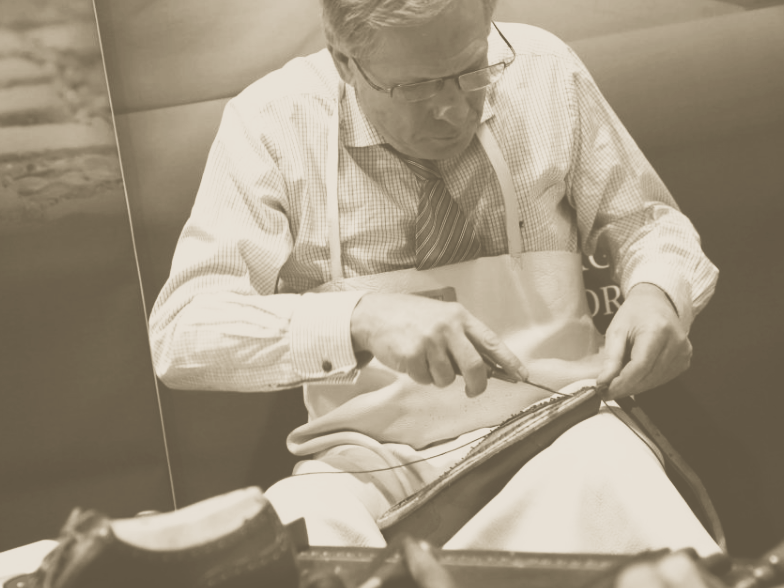
Lucian Maftei — The Vienna Bespoke Shoemaker Who Starts from the Walk
Published: 2026-09-04/Last updated: 2026-09-04/Author: Masayuki Kaneko
This article was produced by The Makers Guild from first-hand information obtained in a direct interview with Lucian Maftei, together with officially published information.
In bespoke shoemaking, “fit” means more than measurements matching a chart. It is the state in which the wearer forgets the shoe, and walking itself becomes comfortable. Lucian Maftei of Vienna is a bespoke shoemaker who places that state at the very center of his work.
The workshop began as a family business that his father, Alexandru Maftei, opened in Vienna in 1996. Hand-sewn welted shoes from 1,700 euros, delivered in about two months — unusual terms by the standards of bespoke. This article traces, in his own words, the family division of labour that makes those terms possible, and the line the workshop will not cross: never to work apart from the actual foot.
Walking Comfort as the Axis of the Work
What Lucian Maftei places at the center of his shoemaking is the comfort of the wearer’s walk. Asked about the purpose of the work, his answer turns to the sensation of the foot before the aesthetics of dress.
“Our main focus is to make sure the customer feels very comfortable in the shoes to enhance walking experience.”
says Lucian Maftei. In this workshop, “comfort” is not treated as a matter of mood. It is a verifiable goal, built into a concrete sequence: measure the foot, test with a provisional shoe, then proceed to the final pair.
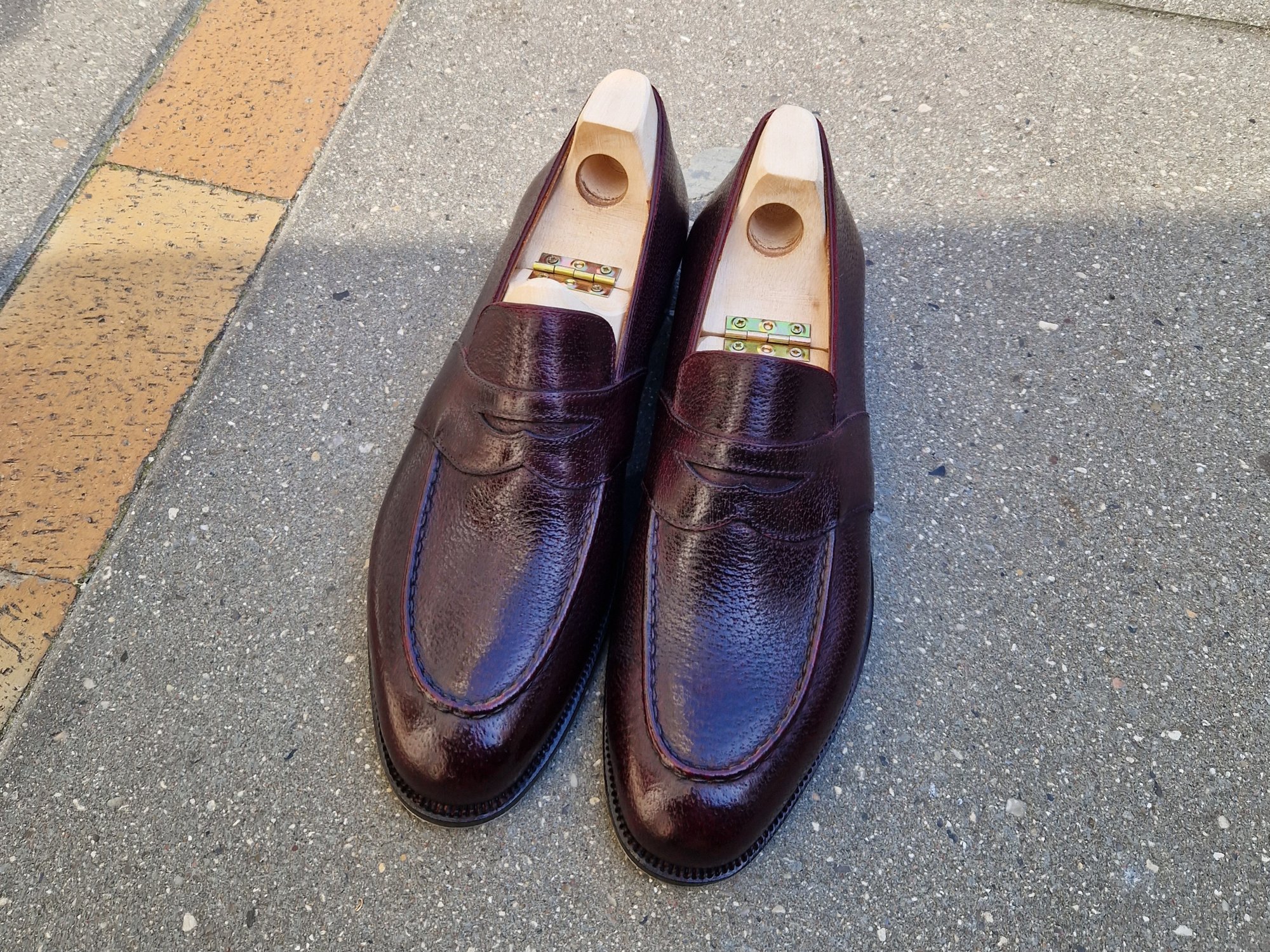
The core of the work is bespoke, built on a personal last carved for each client. The priority given to comfort connects directly to how the workshop receives clients with complex foot shapes.
A Boyhood Without Shoes in His Size
The origin of this axis lies in Lucian Maftei’s own childhood.
“I noticed the importance of this as a child. I often did not have shoes my size and that left a mark on me. Now, finding shoes that fit me is a challenge because of my difficult feet. Therefore I try to turn walking into a pleasant experience, especially for people with complex foot shapes.”
says Lucian Maftei. That the maker himself knows the struggle of finding shoes that fit is the premise of this workshop. Feet with unusual widths, high insteps or differences between left and right are received not as exceptions but as work the house expects.
A Lineage That Began in an Uncle’s Workshop in Romania
The family’s craft began when founder Alexandru Maftei entered his uncle’s workshop in Romania at the age of fifteen. His apprenticeship opened with repair work, before the making of new shoes.
In 1988, Alexandru Maftei moved from Romania to Vienna. Speaking no German at first, he earned his living in construction, then joined the venerable Viennese house Rudolf Scheer & Söhne, where he spent about five years. In 1996 he opened his own shop and workshop in Vienna. Introductions to the previous owner’s clientele gave the young business its first footing.
As of 2026, it is his son Lucian Maftei who stands at the order desk and faces each client’s feet. The craft the founder entered through repair has been passed into the hands of the second generation.
A Family Division of Labour Behind the Two-Month Lead Time
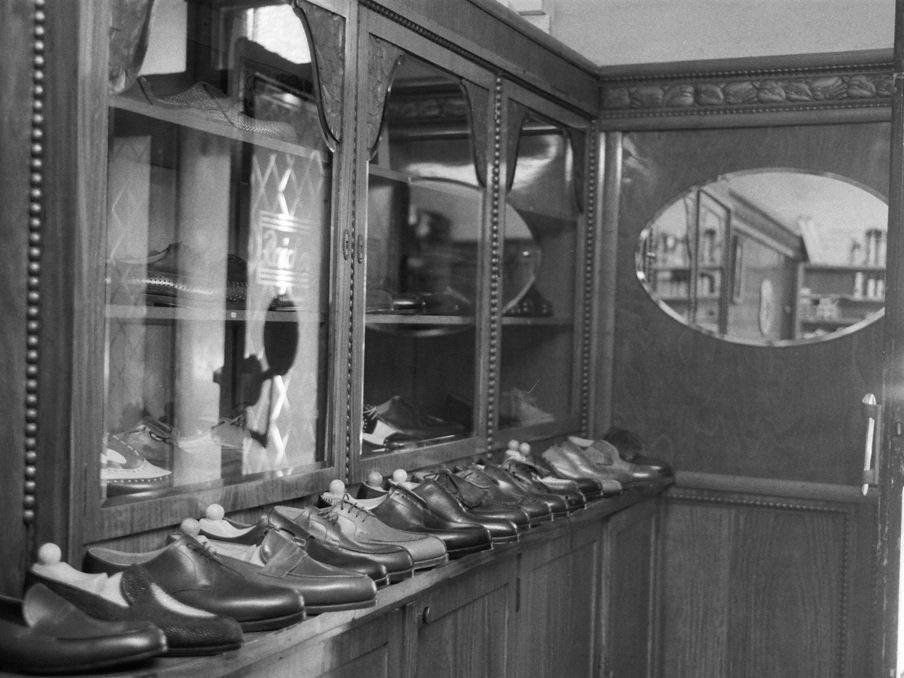
The benchmark from order to delivery is about two months. As an editorial note, hand-sewn bespoke is commonly quoted at six months to a year; against that backdrop, the two-month lead time stands as one of the workshop’s defining strengths.
Lucian Maftei explains the speed from the side of the organisation.
“We are a family business and there are multiple people involved in the crafting of the shoes.”
A short sentence, but it names the mechanism. Measuring, last-making and fine finishing take place in Vienna, while the principal construction, including the sewing, has been carried by the family’s workshop around Piatra-Neamț in north-eastern Romania. Unlike a one-person atelier where a single maker walks through every stage in sequence, several pairs of family hands move at once — and each of those hands, he adds, has many years of experience in this field.
As of 2016 the output was roughly 300 pairs a year. It is a number beyond the reach of a father and son alone, and a sign that the family is also the unit of production.
The Trial Shoe as a Stage of Confirmation
Before the final pair is begun, a provisional shoe is made.
“The customer’s foot is carefully measured and then a trial shoe is made to make sure that the proper shoes will fit well.”
says Lucian Maftei. Lasts are prepared separately for the left and the right foot, and refined after the fitting of the trial shoe. What is examined there includes pressure, the way creases form, the feel in walking and how the shoe looks on the foot. Depending on the result, even the design of the facing can be reworked. Within the short two-month schedule, this stage of confirmation is not skipped: speed comes from the division of labour, and fit is protected by the trial pair — the roles are clearly separated.
Between the Actual Foot and Ordering from Afar
To answer requests from overseas, Lucian Maftei is, as of 2026, developing a way to order bespoke shoes without visiting for a fitting. He does not hide why the development is difficult.
“It is difficult to develop that system because it means not being able to work with the measurements that I usually have. Pictures and other digital data can be misleading or imprecise and seeing the foot in real life gives me a clear understanding of it.”
The convenience of ordering from afar, or the certainty gained by seeing the actual foot. Weighing the two, Lucian Maftei does not come down from certainty — that is the judgement held in this answer. Declaring photographs a sufficient substitute would finish the project quickly; a workshop devoted to complex feet knows better than anyone the risk of making without seeing.
A Design That Stands on the Austrian Tradition
The foundation of the design is the Austrian shoemaking tradition.
“We indeed stick to classical models for our shoes, more precisely to the Austrian shoemaking tradition. Yet we don’t back up from making newer models and are always open for innovation.”
says Lucian Maftei. The actual line of work matches the words: black wholecuts, tassel loafers and derbies — the classic canon — stand at the center.
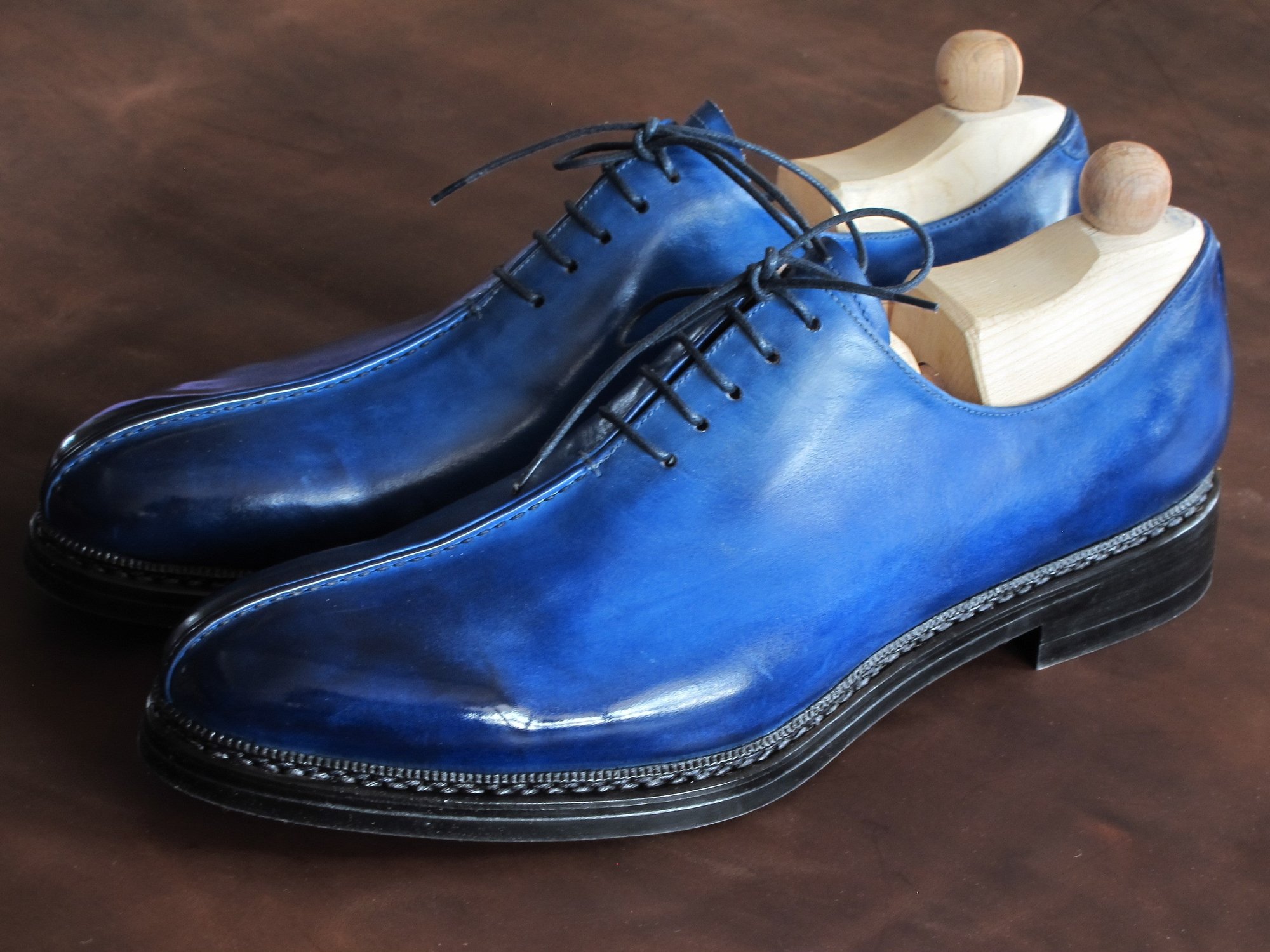
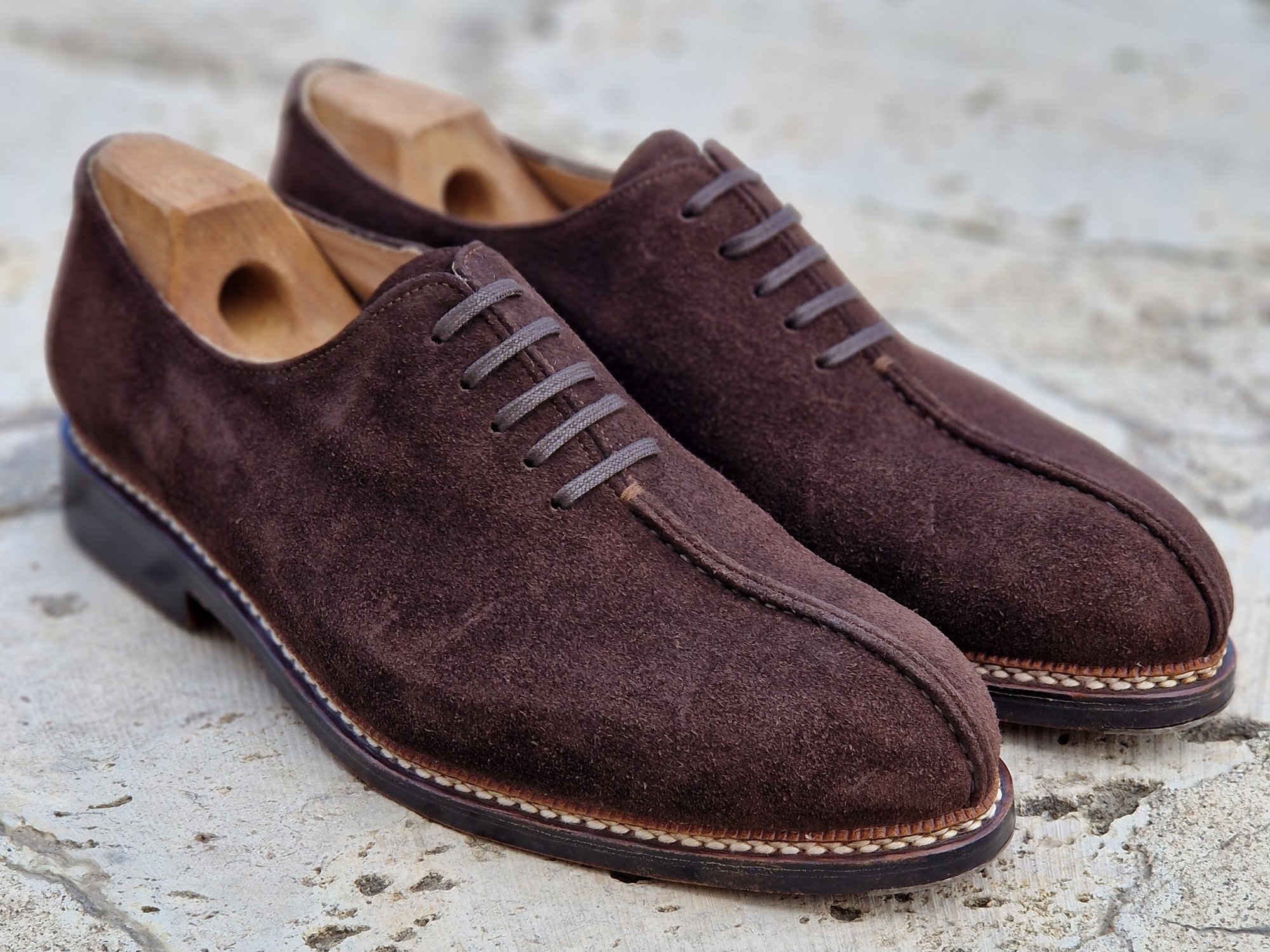
Within that canon sit models that carry the house’s own names. One piece, cut from a single hide with no visible seam, is the workshop’s signature model, and Modell Alexandru, with its straight seams at toe and side, bears the founder’s name. The model named “Erzherzog Johann”, made in 2023, exists in two versions of the same design, in contrasting materials: blue calfskin and brown hunting suede. Keeping to the canon, and letting materials and names carry the character. That pairing is how Maftei thinks about design.
Hand-Sewn Construction and the Range of Leathers
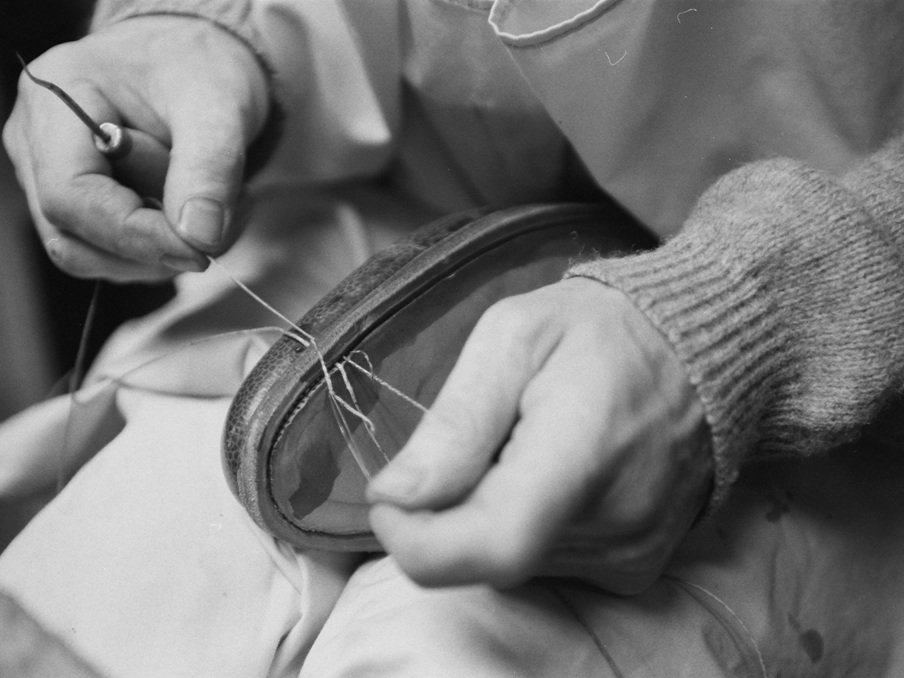
The foundation of the bottom-making is the hand-sewn welted construction, its welt and sole seams sewn by hand. The waist is pegged with hand-driven wooden pegs, and the workshop also answers in Zwiegenäht, a hand-sewn double-stitched construction. That the decisive stages are handwork is itself the evidence that the two-month lead time is not the product of mechanisation.
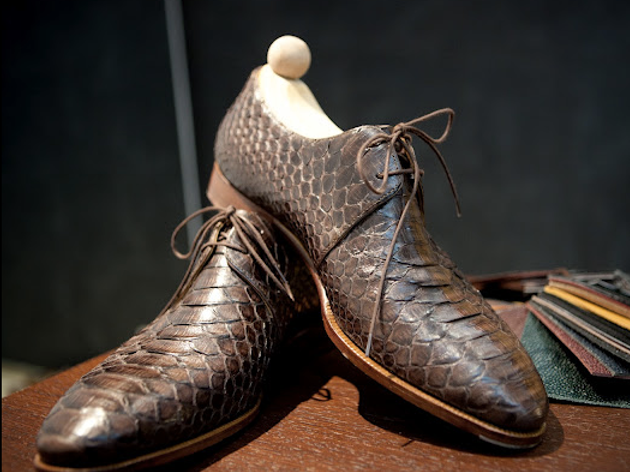
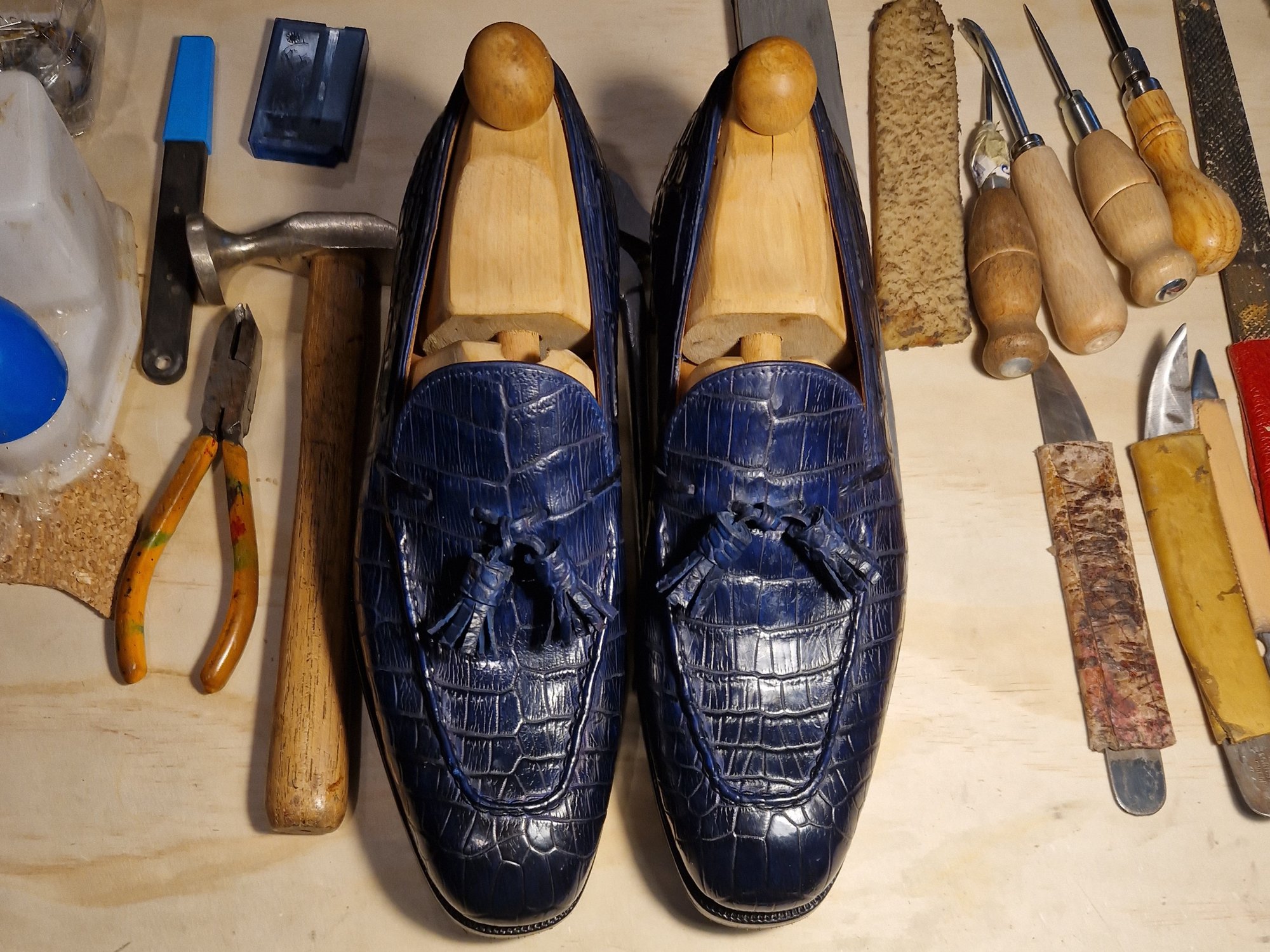
The range of leathers is wide: alongside calf and suede, the work includes crocodile, snakeskin and pigskin. As of 2016, the uppers came from French tanneries and the linings from Britain, and about half of the colours were hand-dyed in the workshop. Dyeing one’s own colours, rather than relying on ready-made ones, is of a piece with treating material as the place where character lives.
The workshop also takes on repairs. That a well-worn pair can be brought back to its maker satisfies, on the side of continuity, a condition that bespoke footwear meant to be worn for years presupposes.
Ordering in Practice, from 1,700 Euros
Bespoke starts at 1,700 euros, with a lead time of about two months as the benchmark. An order begins with having the feet measured at the Vienna shop.
The price has moved in steps: around 1,000 euros as of 2016, then 1,400 euros plus 200 euros for the first last as of 2024, and from 1,700 euros as of 2026.
For those who cannot travel to Vienna, there are trunk shows. In 2026, dates are planned in Copenhagen, Hamburg, Berlin and Frankfurt, with father and son travelling to measure and take orders in each city. For clients farther away, the remote-ordering system described above is under development, pursued inside the principle of seeing the actual foot.
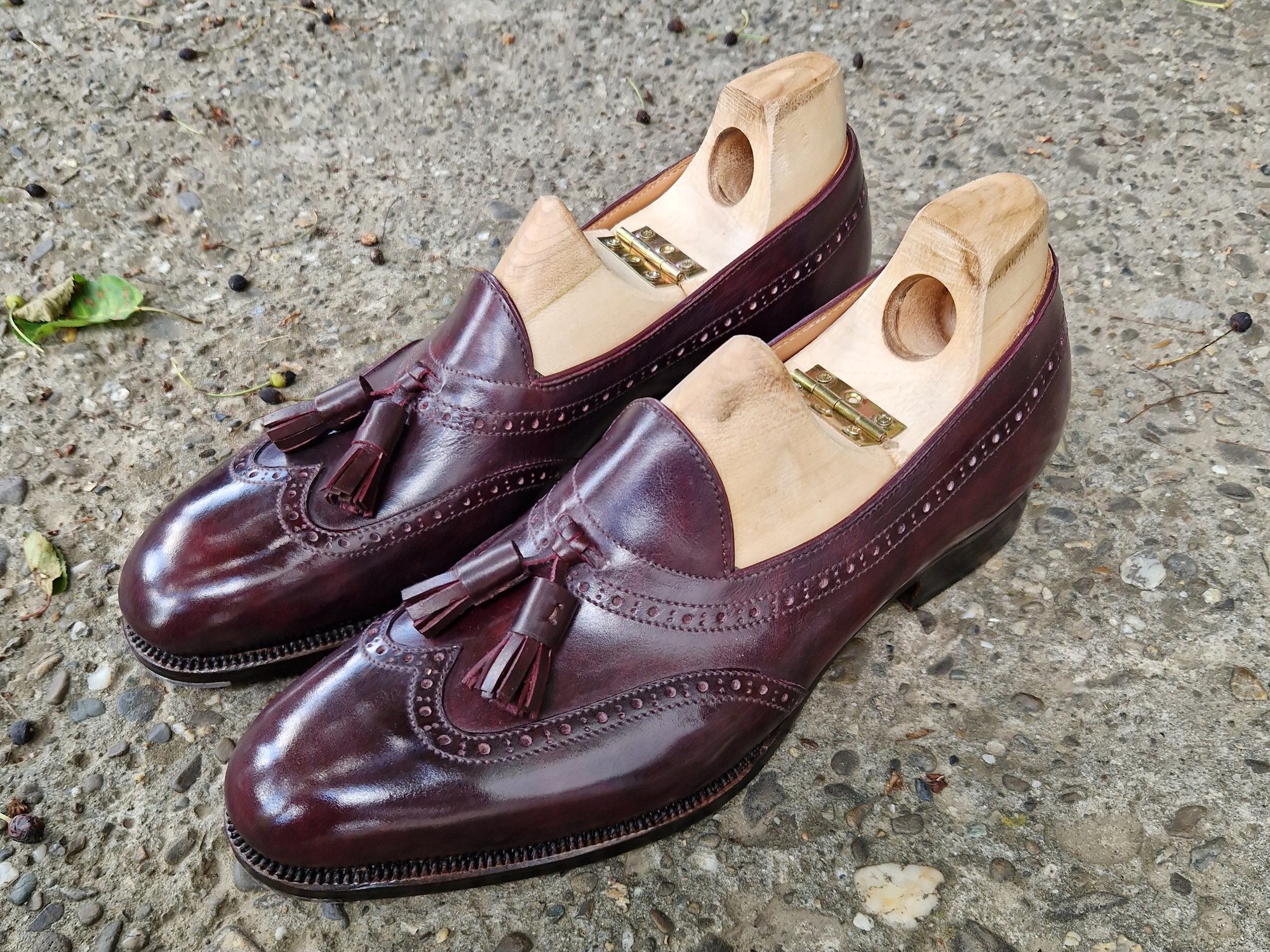
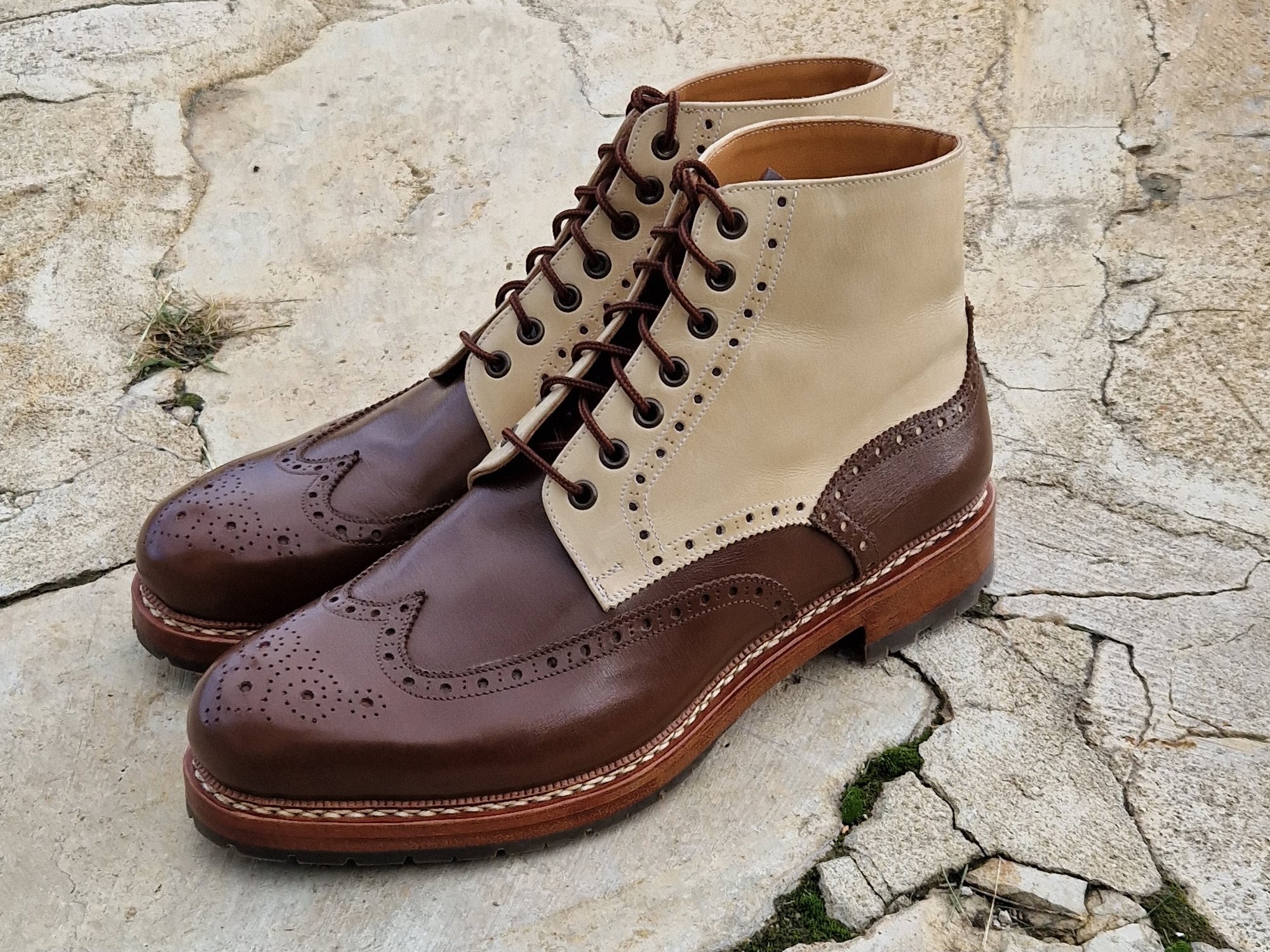
About two months is not a figure meant to win a race. It is the time the workshop can offer while the family divides the stages between them and fit is confirmed on separate left and right lasts and a trial shoe. From the day your feet are measured in Vienna, some two months later, a pair built on a last carved only for your feet arrives.
Workshop Information
MAFTEI (Maftei Mass-Schuhe)
Location: Vienna, Austria
Orders: Bespoke (at the Vienna shop and at trunk shows in European cities; a remote-ordering system is under development as of 2026)
Price range: Bespoke from 1,700 euros
Production time: About 2 months
Website: maftei.com
More Craftsmen
Sponsorship Information
“The Makers Guild” is an international community site that shares craft and shoe culture. We are currently welcoming sponsorships from partners who support our mission.