George Cleverley — A Mayfair Inheritance, Passed Hand to Hand
Published: 2026-09-04/Last updated: 2026-09-04/Author: Masayuki Kaneko
This article was produced by The Makers Guild from first-hand information obtained in a direct interview with George Glasgow Jr, together with officially published information.
In bespoke shoemaking, “inheritance” means more than keeping a name over a door. It means that the judgements themselves — how a last is shaped, how leather is cut, where the line of a toe falls — keep passing from one living pair of hands to the next. George Cleverley of Mayfair, London, is a bespoke shoemaking house that has practised inheritance in this sense since 1958.
Every pair begins with a wooden last carved for one client alone. From there it passes through the hands of five artisans and more than 100 hours of handwork. This article follows that process — and the prices, lead times and practicalities of ordering — in the words of CEO George Glasgow Jr.
An Inheritance Never Handed to a Factory — One Thread Since 1958
From its founding in 1958 to 2026, George Cleverley’s shoemaking has never been moved to an outside factory. “Nothing has been handed to a factory,” says George Glasgow Jr. The point is not merely where the shoes are made. It is how the knowledge itself is taught.
The house tagline reads “BESPOKE SHOEMAKERS OF MAYFAIR, SINCE 1958.” Shoemakers of Mayfair; since 1958. Those are the only two claims in the name. Before saying what it makes, this house says where, and by whose hands.
The Founder, George Cleverley — Apprenticed at 15, Independent in 1958
The founder, George Cleverley, was born in 1898 into a London shoemaking family and entered his apprenticeship at fifteen. The years before independence were spent at the Mayfair firm Nikolaus Tuczek — thirty-eight of them.
In 1958 he left Tuczek and opened his own shop on Cork Street. In 1978 he named two long-standing pupils, John Carnera and George Glasgow Sr, as his successors. The founder worked until shortly before his death in 1991, just short of ninety-three, and the firm carried on along that same line of master and pupil.
Shipwreck Leather and Shoes for the Screen — Commissions That Find This House
Some of the commissions that arrive here amount to wearing history itself. One example: shoes made from Russian reindeer hide recovered from a ship that sank in 1786 — leather that had rested on the seabed for the better part of two centuries.
Film work continues too. For The Batman, the house made the shoes worn by Robert Pattinson as Bruce Wayne. What the audience sees at the cinema comes from the same Mayfair hands as a client’s own pair. Whether the commission involves shipwreck leather or a film studio, the way of making does not change.
The Chisel Toe — A House Signature Shaped by the Founder in the 1950s
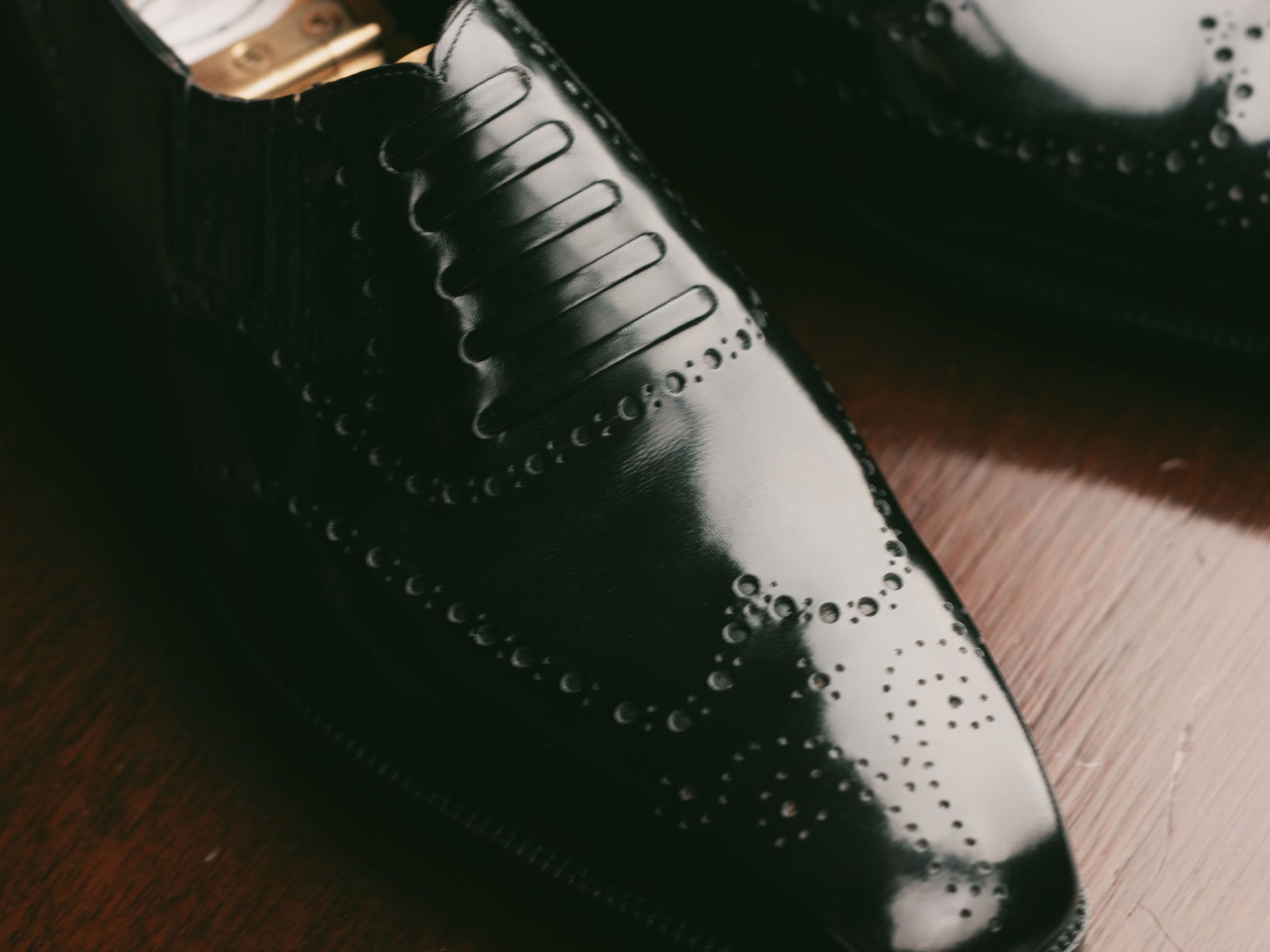
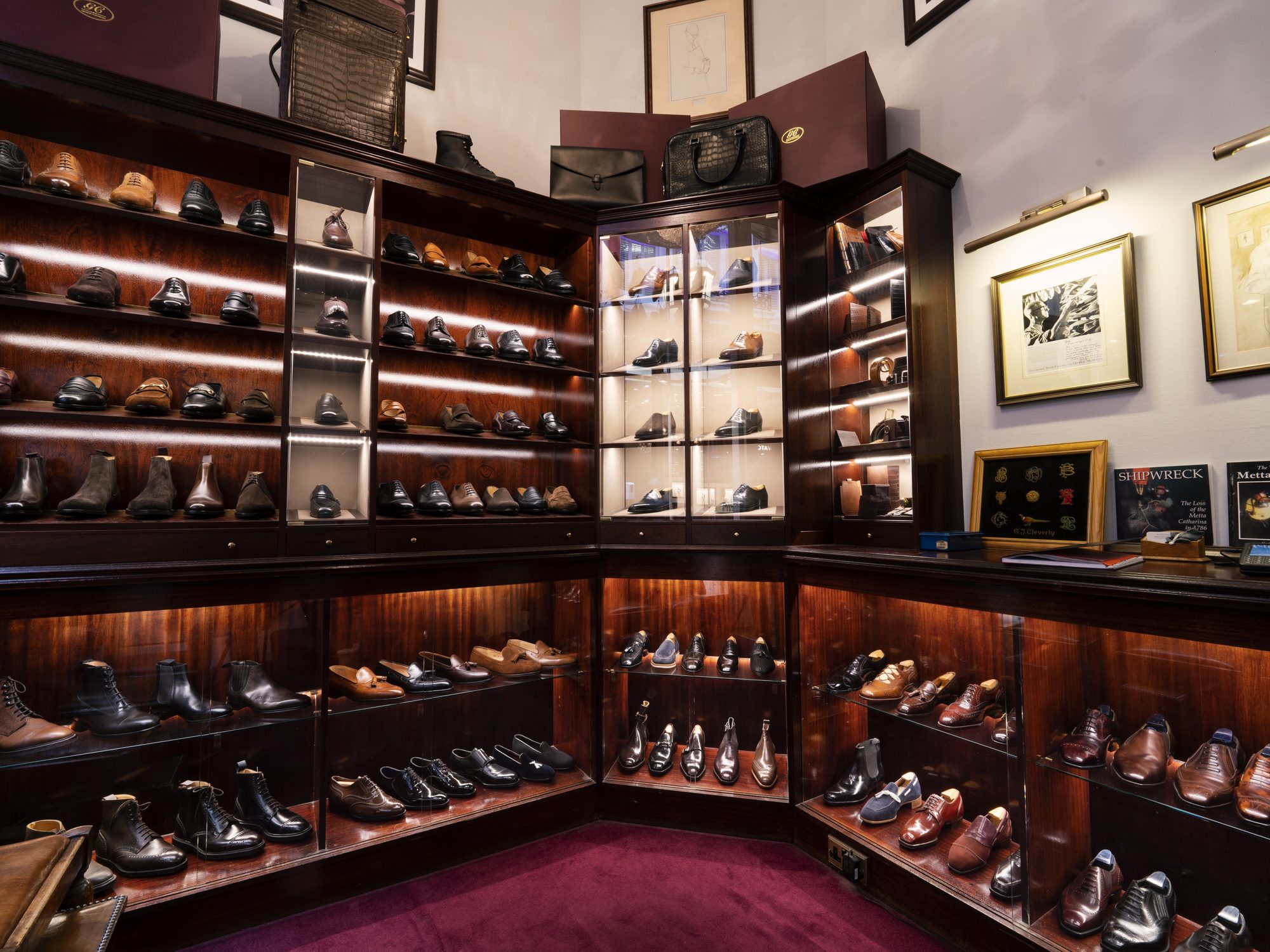
The mark by which this house’s shoes are known sits at the toe. The chisel toe — an angular shape as if pared away with a chisel — was created by the founder in the 1950s and remains the house signature as of 2026.
Among the signature models is the “Churchill,” a design descended from a pair created during the wartime Blitz at Winston Churchill’s request. Its defining features — imitation laces and elasticated sides — carry through to the “Churchill II,” added in 2018. In this house, the names of the models serve as an index of its history.
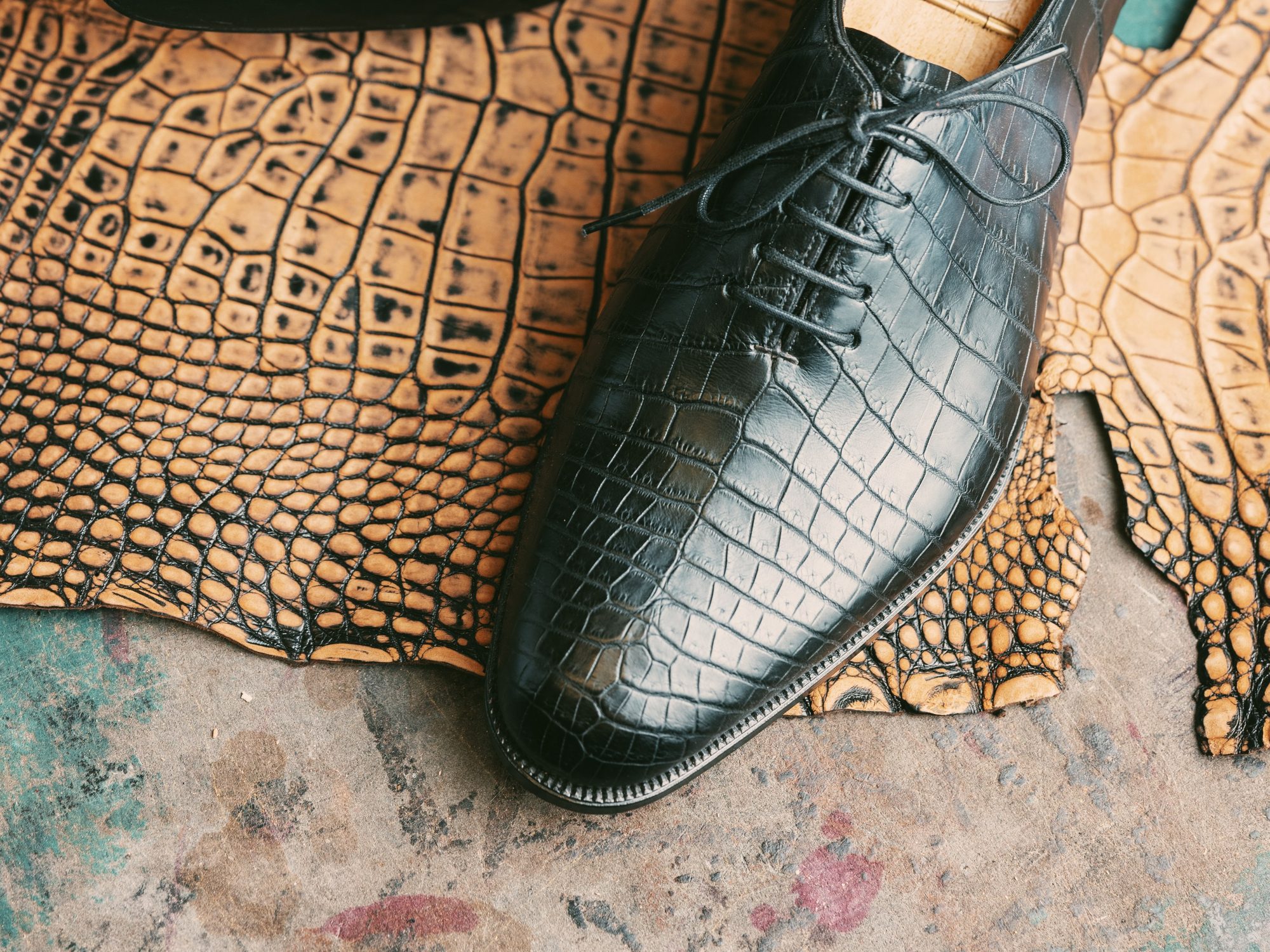
From Calf to Stingray — The Range of Leathers
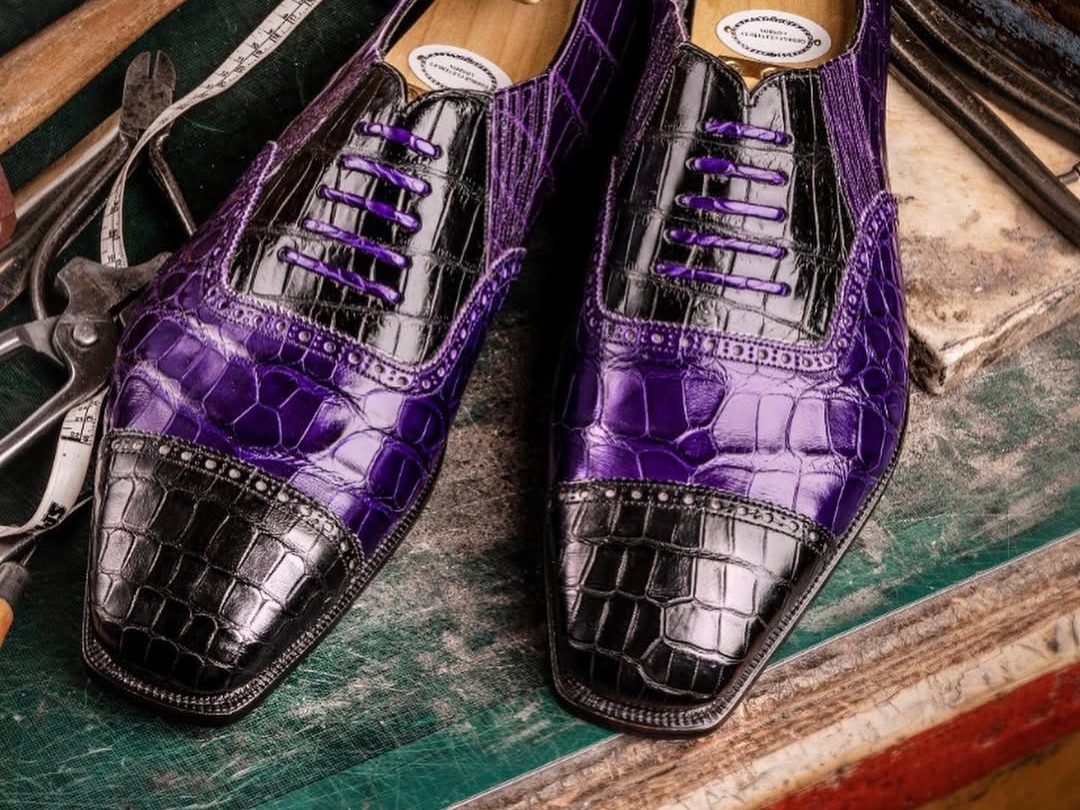
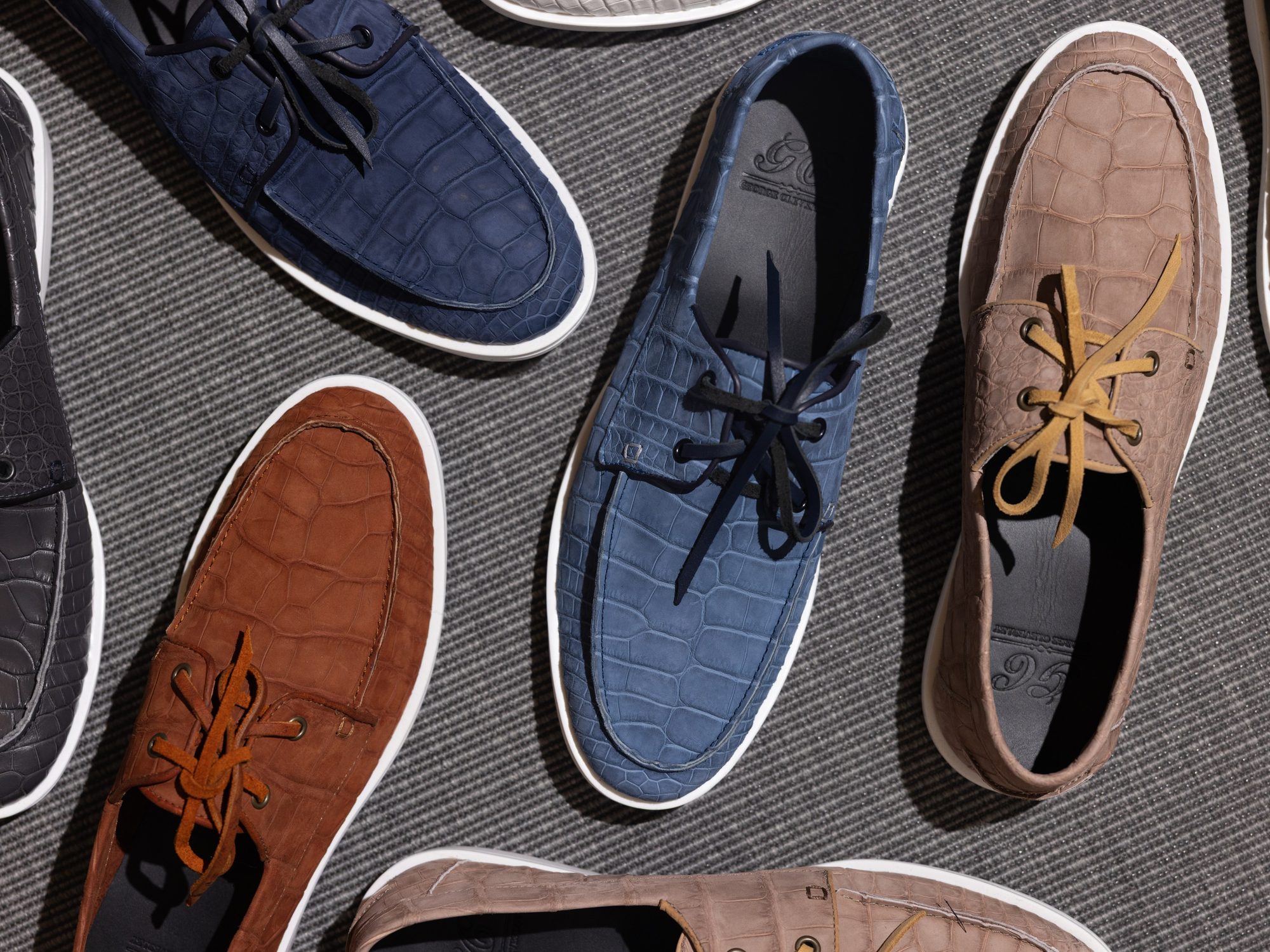
The leathers run from calf and cordovan to rare hides: alligator, ostrich, kangaroo and stingray. For cordovan, some models use Shell Cordovan from Horween in the United States. The same hides go into bespoke small leather goods and sporting accessories alongside the shoes.
Rare hides vary greatly from skin to skin. The leather goods and accessories are priced on application rather than by a fixed list — because the cost moves considerably with the hide selected.
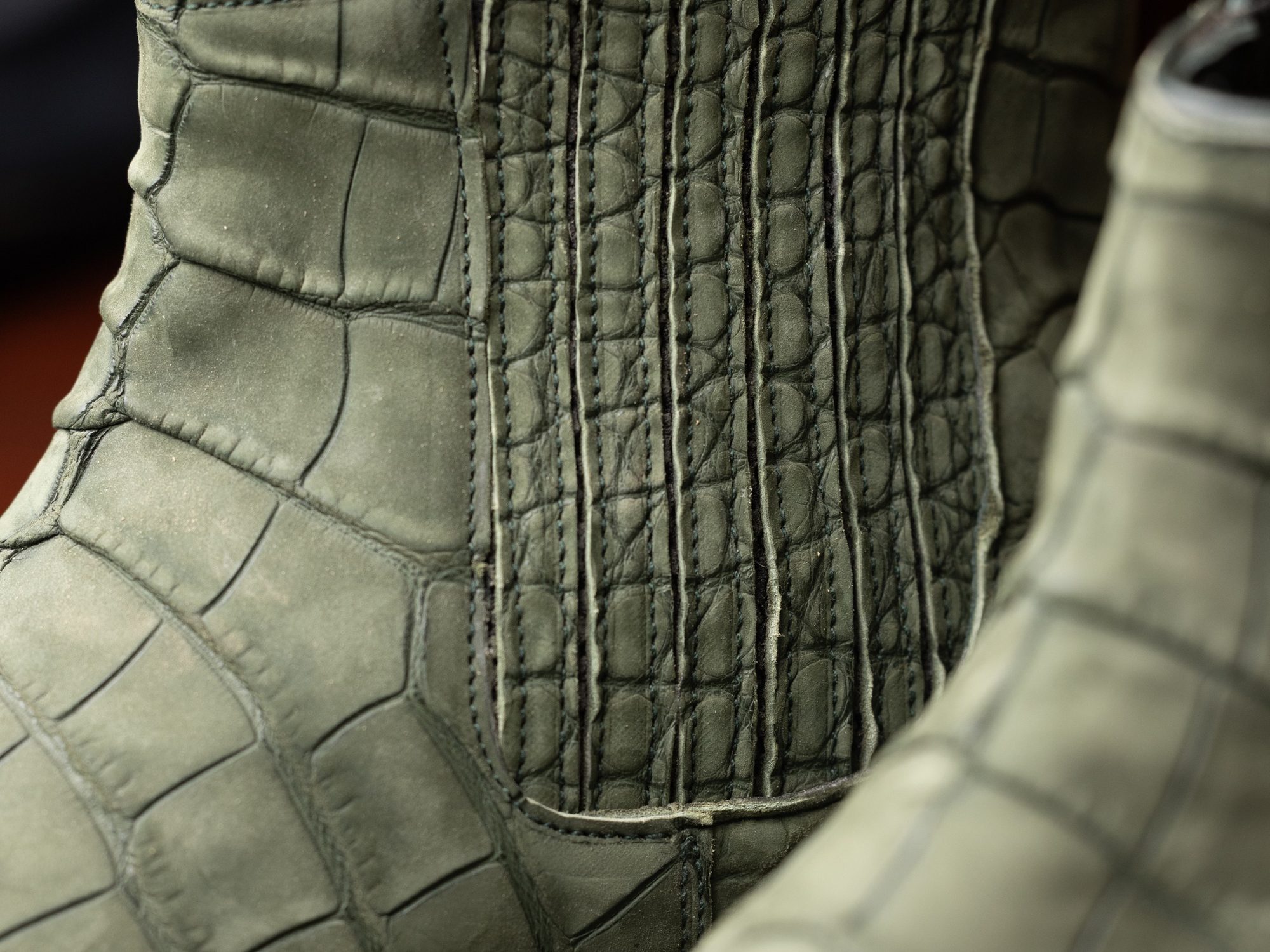
A Personal Last and Five Artisans — Over 100 Hours in a Pair
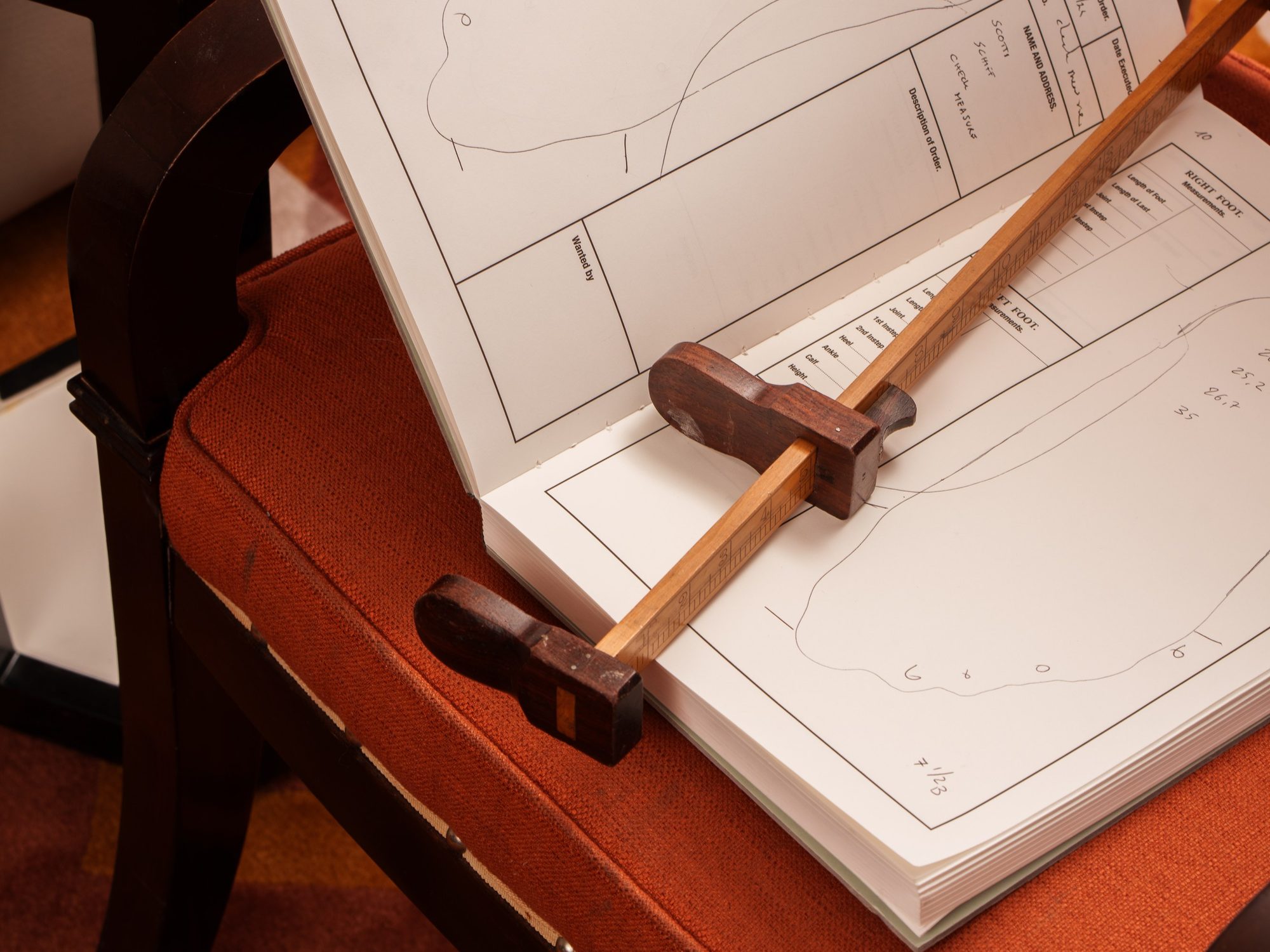
How a bespoke pair turns out is largely decided at the very first stage. At George Cleverley, that first stage is the carving of a wooden last for each client.
“Every bespoke commission begins with a personal wooden last, hand-carved to the client’s measurements and to any peculiarities of the foot noted at fitting.”
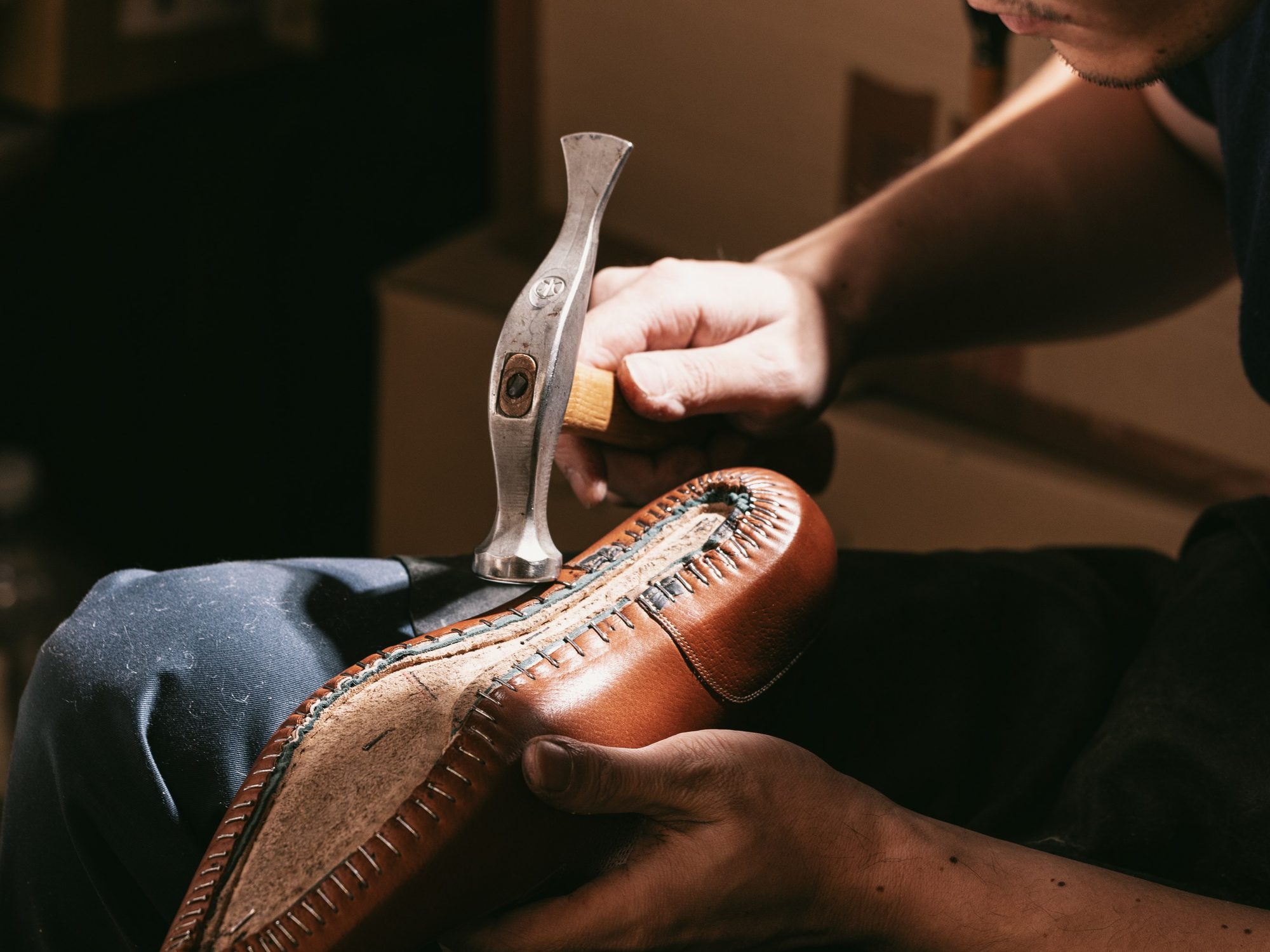
So says George Glasgow Jr. What the last records is more than a set of measurements — it holds the quirks of the foot observed at the fitting. From there the pair passes through the hands of five artisans, with more than 100 hours of handwork before completion. All footwear is cut in the Mayfair workshop and finished in London.
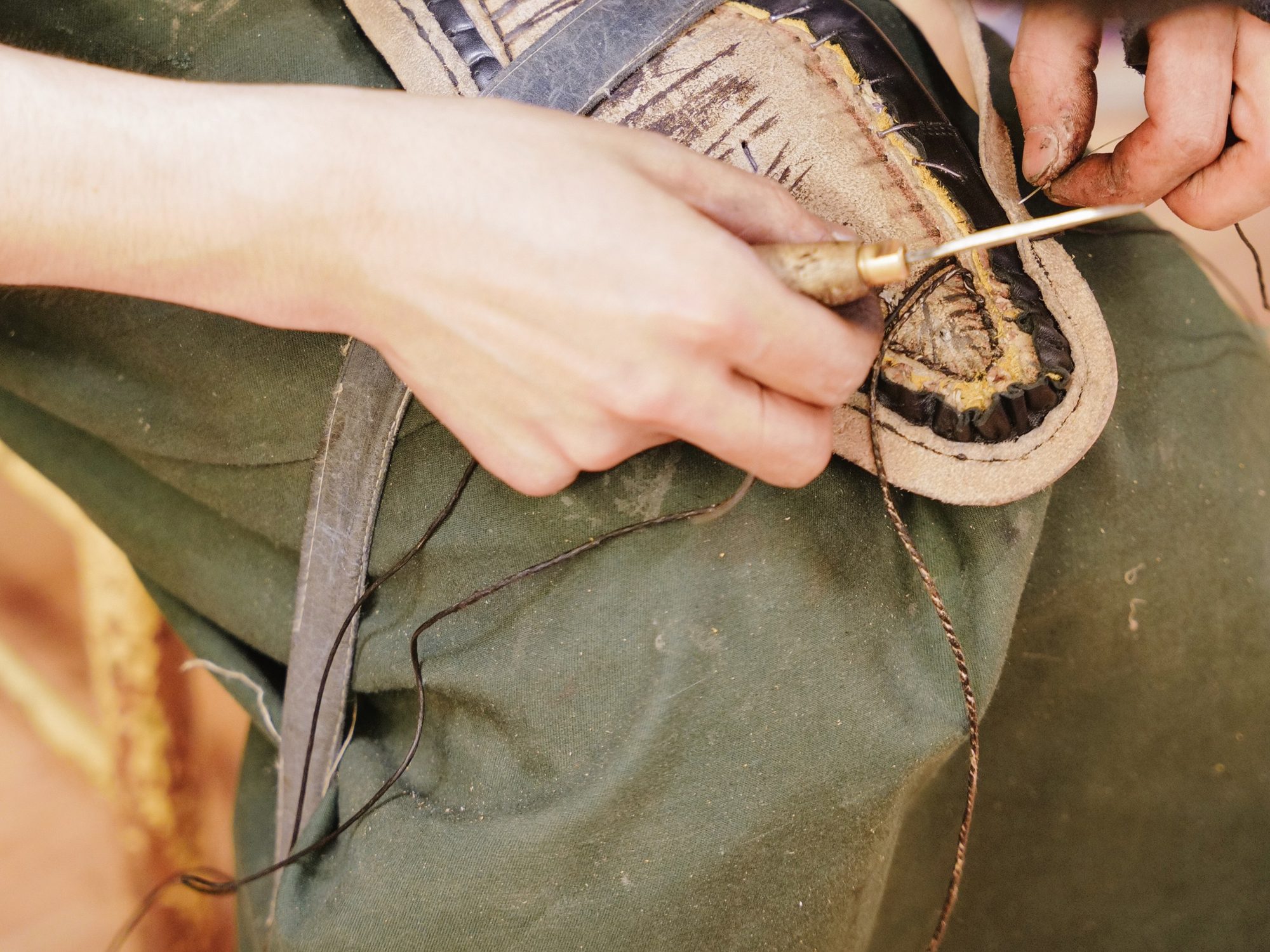
Beechwood Lasts — Carved Left and Right, Kept Under the Client’s Name
The lasts are carved from kiln-dried beechwood or hornbeam — separately for the left foot and the right. They are not made identical, because no pair of feet is.
Once a pair is finished, the lasts are not discarded; they are indexed and stored. A second commission starts from the existing last, and so finishes sooner than the first. The shelves of client-named lasts in the workshop are not decoration — they are the working stock for the next order.
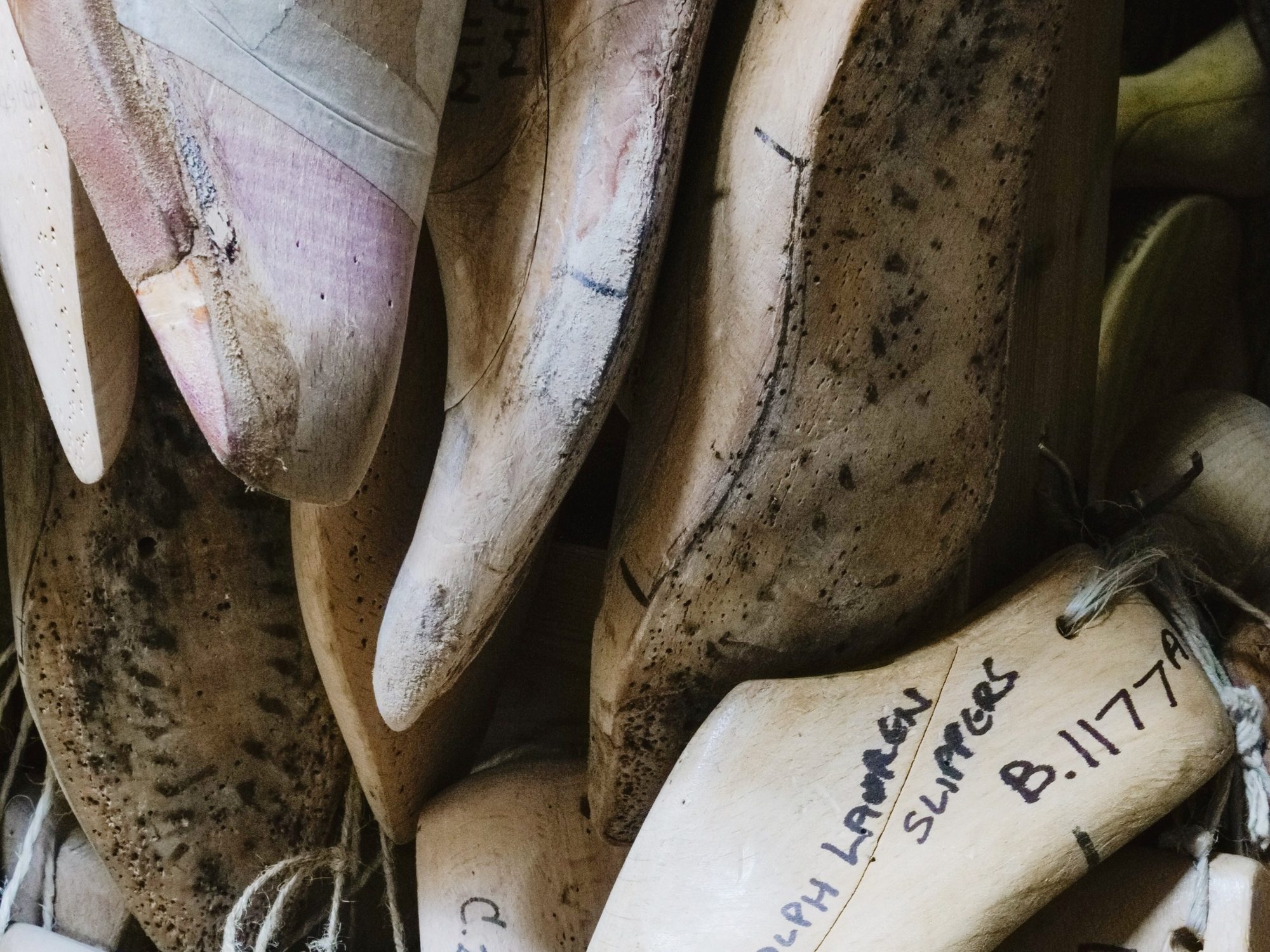
Machinery from the 1920s — The Decision Against Automation
The workshop continues to use vintage machinery dating from the 1920s rather than modern automation. The reason is stated plainly:
“We continue to use vintage machinery from the 1920s rather than modern automation, specifically to keep the work in the hands of the maker.”
So says George Glasgow Jr. The criterion for equipment is whose hands the work stays in. The choice costs speed — the roughly six-month lead time described below is part of the price.
A Lead Time of About Six Months — A Process That Is Never Shortened
From first measurement to delivery, the guide is about six months. Complex designs and rare hides take longer.
“As every stage is completed by hand, and a personal last must be carved and a trial fitting held before the shoe is finished, we do not shorten this process.”
So says George Glasgow Jr. It reads as a description of the process, and it doubles as the definition of the lead time: there is no stage that can be dropped. Six months is not time spent waiting — it is the last, the fitting and the hundred-plus hours of handwork stacking up in order.
Bespoke from £5,000 — Prices, and Where Repairs Are Done
Bespoke begins at £5,000, arrived at through the personal last and a trial fitting. Small leather goods and sporting accessories are priced on application, according to the hide chosen.
The house also remains the point of contact after the purchase. Repairs are accepted at the London shop or at trunk shows around the world, and a full service takes three to four months as standard. For shoes meant to be worn for many years, the fact that the place that made them is also the place that repairs them weighs as heavily as the price.
Ready-to-Wear from £500 — Lasts from the 1960s, Reintroduced
The ready-to-wear collections start at £500 and, subject to stock, involve no wait. In autumn 2024 the “Anthony Cleverley” collection joined the range.
Anthony Cleverley sits within ready-to-wear as semi-bespoke, built on lasts from the 1960s, with the cutting, welting and finishing done by hand. The range is broad — alongside the dress shoes there are sneakers, and the rare hides appear in ready-to-wear as well.
Ordering from Abroad — Trunk Shows Where the House Comes to You
You do not need to travel to London to commission a bespoke pair.
“For bespoke, we travel to our clients.”
So says George Glasgow Jr. The trunk shows carry the range of styles and materials; the Master Shoemaker takes measurements in person and transposes them into a personal last on returning to London. The house visits the United States each season, and Asia often.
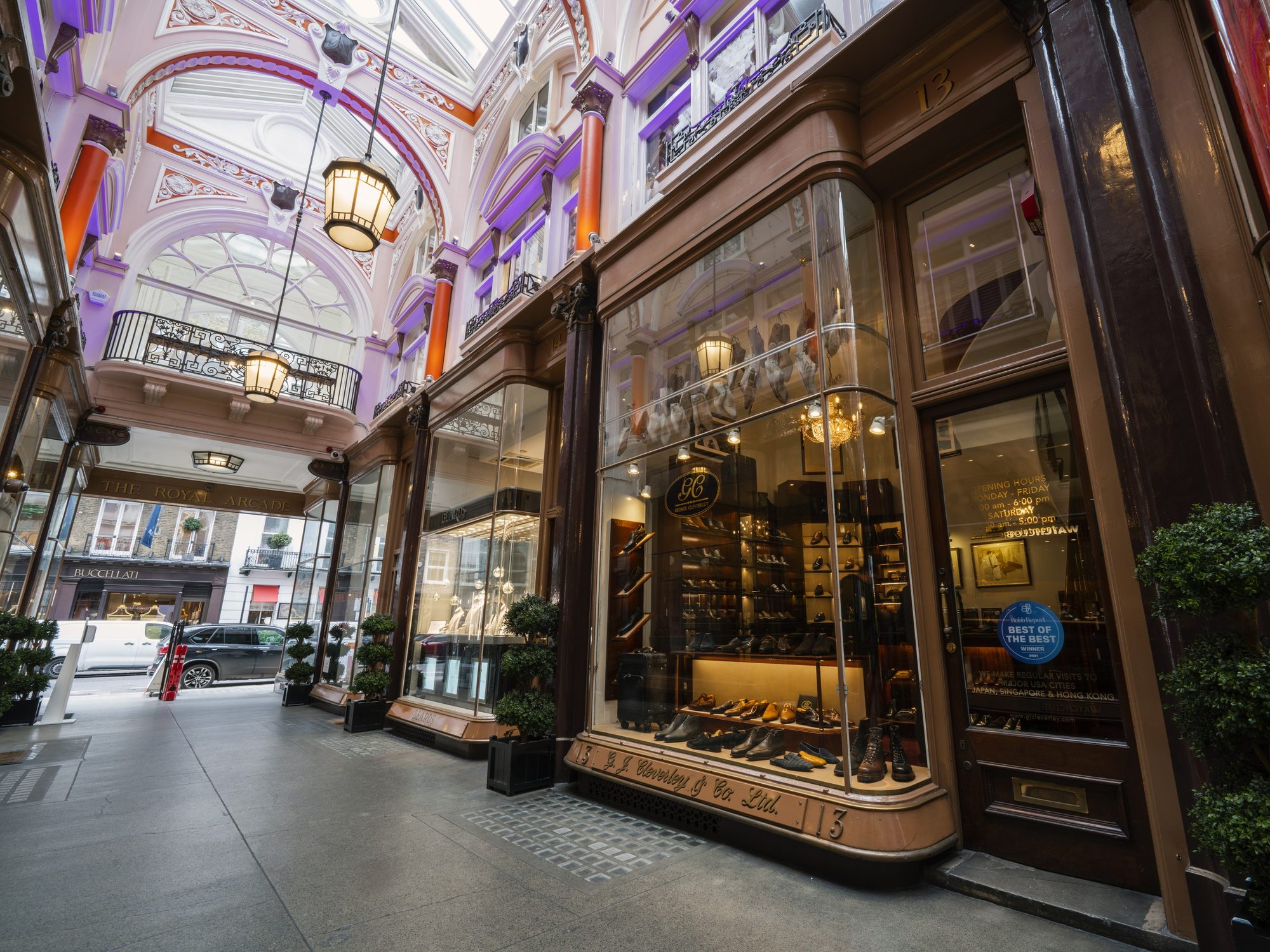
Ready-to-wear and small leather goods can be bought from the official site with worldwide shipping. MR PORTER and Mytheresa carry selected styles, and in Japan the shoes are stocked at United Arrows, BEAMS and Isetan, among others. The Royal Arcade shop also welcomes visits by appointment.
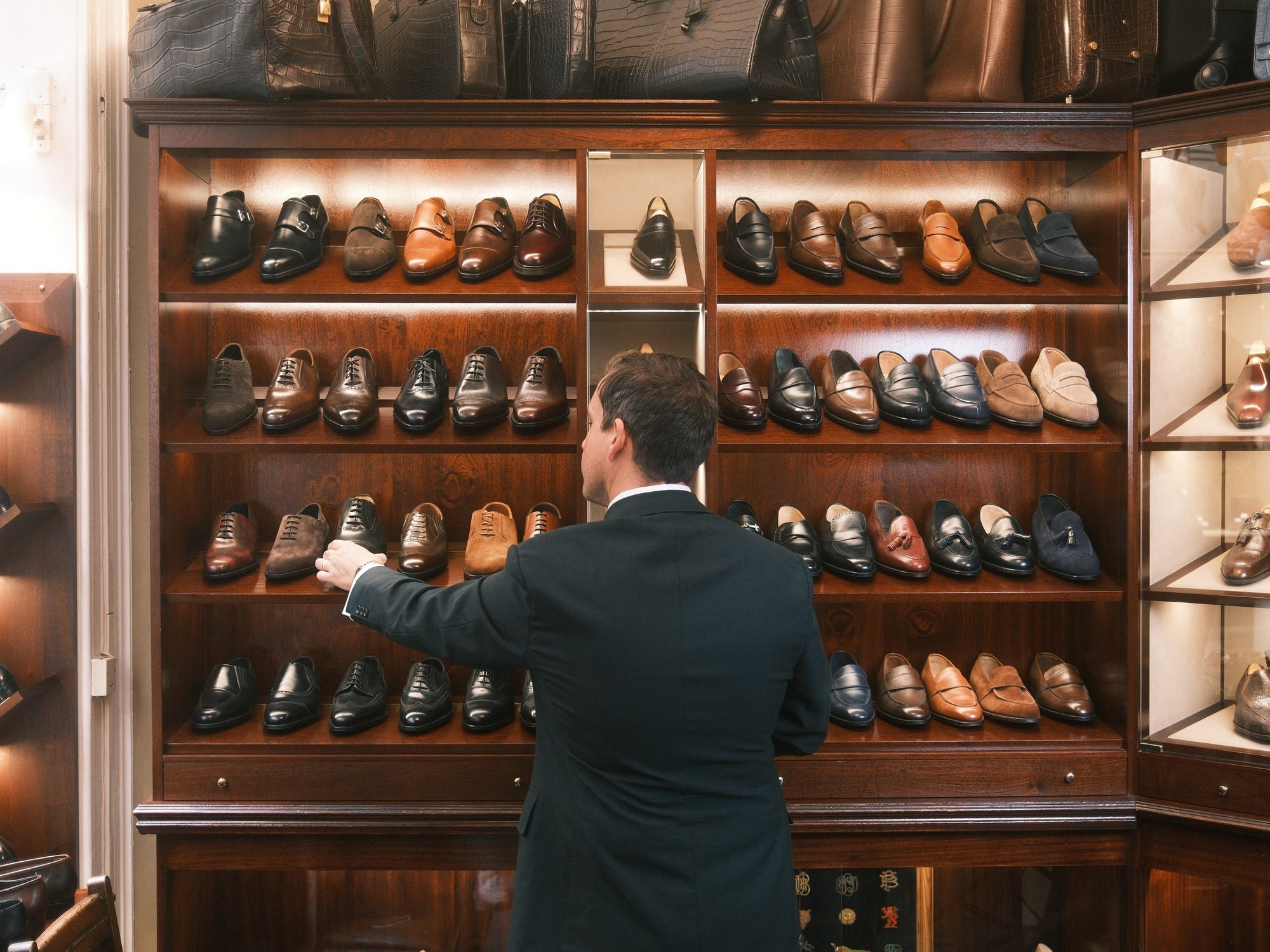
The Third Generation — George Glasgow Jr and George Glasgow Sr
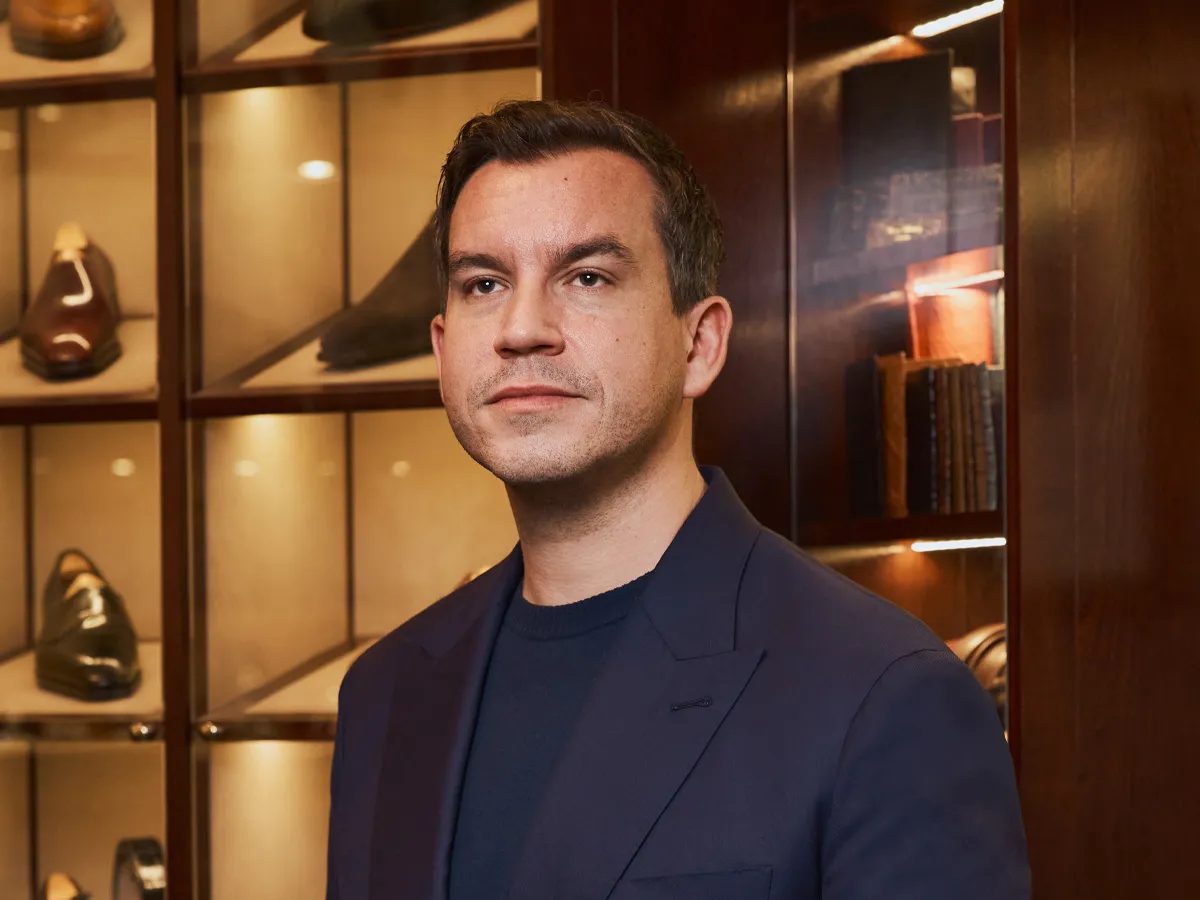
As of 2026, George Glasgow Jr leads the company as CEO and Creative Director, while his father, George Glasgow Sr, oversees bespoke production in Mayfair. The generation named by the founder in 1978 and the generation after it work under the same roof.
“That line of succession, master to pupil, is the reason we hold the standard we do.”
So says George Glasgow Jr. What is offered as the guarantee of the standard is the master-to-pupil line itself. And the line is more than words: John Carnera, named successor in 1978, still carves the lasts as Master Lastmaker as of 2026, in a career now past its sixtieth year. Three generations from the founding — and the name over the door is still the first shoemaker’s own.
“The knowledge has been passed directly from one pair of hands to the next, and we consider that continuity our real inheritance.” — So says George Glasgow Jr.
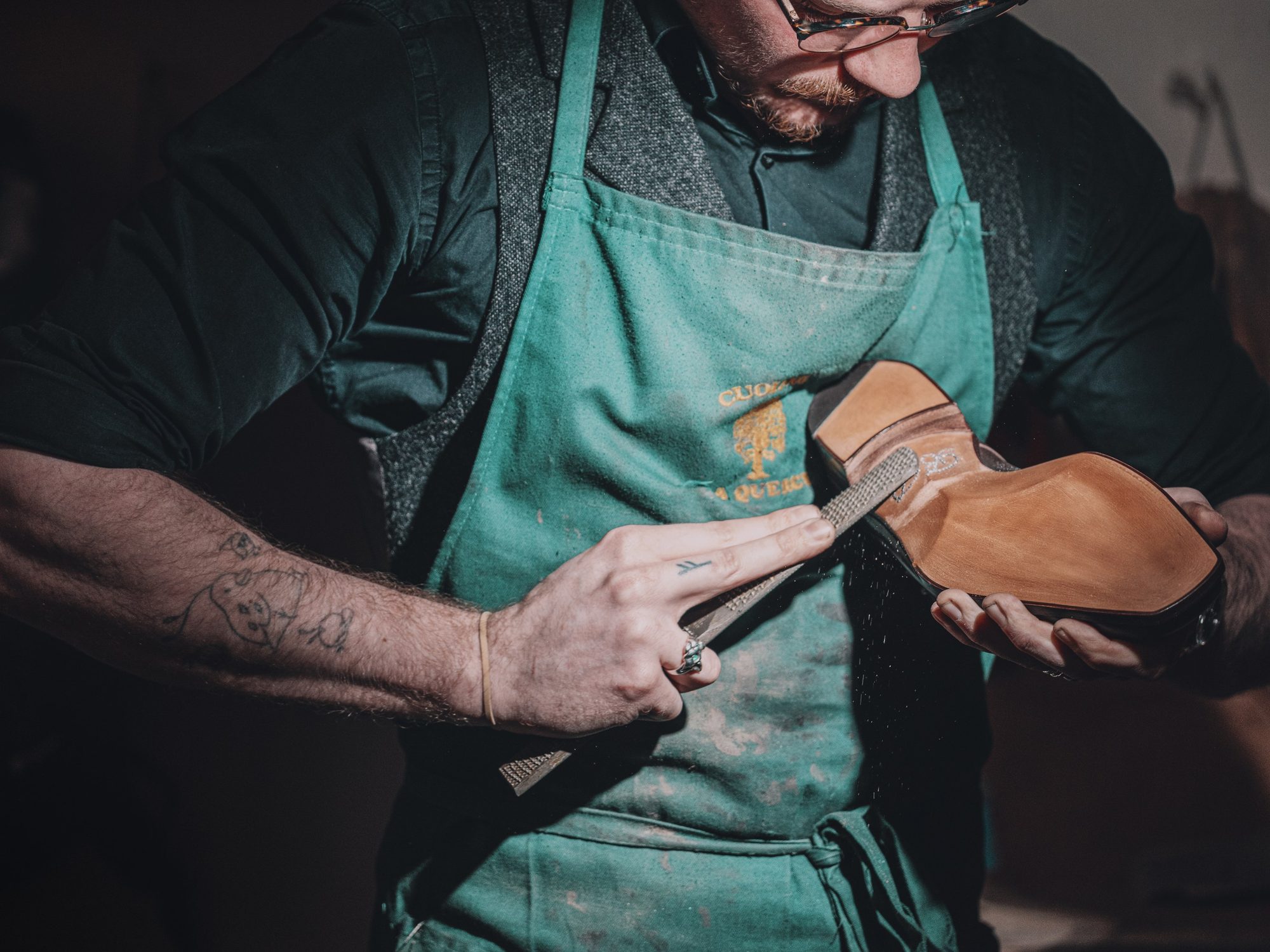
Workshop Information
George Cleverley
Location: London, United Kingdom
Orders: Bespoke (London shop; trunk shows in the US and Asia) / Ready-to-wear (official online store, worldwide shipping)
Price range: Bespoke from £5,000 / Ready-to-wear from £500
Lead time: Bespoke approx. six months
Website: georgecleverley.com
Instagram: @georgecleverley
More Craftsmen
Sponsorship Information
“The Makers Guild” is an international community site that shares craft and shoe culture. We are currently welcoming sponsorships from partners who support our mission.